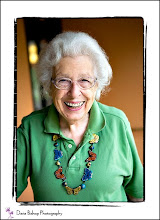
The staff of the Free Church circa 1970.
Rev. Dick York is the man with the wild hair under the 1st "H" of "Church".
I am 3rd from left, back row, also with wild hair.
The Sunday Scribblings prompt today is
telephone. I have never liked telephone conversations. I would much rather see the person I am talking to, their facial expressions and gestures which are such a vital part of communication.
Therefore it may be a surprise to learn that for several years of my life, in the late 60s and early 70s I was the head of a “switchboard” to the largely hippy community in Berkeley. Yes, that involved being at the telephone myself for at least several hours of every day.
This is how it came about: Otto and I, with son Stan, arrived home to Berkeley in August of 1969 after a year of sabbatical leave (Otto’s) in Australia. We had missed the “summer of love” in San Francisco, but the word of it had spread nation-wide, and Berkeley, just across the bay from S.F. , was crowded with a motley congregation of young people - the genuinely idealistic who felt that they knew a better way of life than their capitalistic uptight parents, runaways from abusive homes, drug users, pacifists protesting the ongoing war in Vietnam, and others just here because it seemed like a fun thing to do. All of them needed beds at night and food to eat. Some of them needed the services of doctors, dentists, lawyers, drug counselors. And some of them just needed a hug now and then from a concerned adult. The majority of them took up street residence on or near Telegraph Avenue in the immediate vicinity of the University of California.
In response to this needy group, all of the south campus churches and a number of Telegraph Avenue merchants had banded together to hire Dick York, a young Episcopal priest, as a street minister. He was lent a vacant house owned by the Presbyterian church. It was to be called “the South Campus Community Ministry”. It was soon dubbed by the street people “the Free Church.”
As a middle-aged volunteer, I was astonished at how I was immediately accepted by the predominately young crowd who dropped in to ask for help or just to sit down for a few minutes to visit with one another or with me. Glee Bishop (who later married my son) had already assembled a directory of service providers, but I had to constantly use the telephone to find out who was available or to scout out new sources of help. In the course of time I became Switchboard manager and had the responsibility of several telephones and other volunteers who manned them. The switchboard room was also the drop-in room, which meant that I was also the person in charge of seeing that Free Church rules were obeyed. The rules were “No Dropping, No Holding, No Dealing, No Smoking Grass,” and, soon after I started working there, “No Knives” was added after an incident involving one. The staff had decided that we would be of most use to people we were serving if we adopted a policy of complete confidentiality. No police were to be admitted to the building without a search warrant.
But this Sunday Scribblings prompt was “telephone” not Telegraph avenue culture. Suffice to say that there were hundreds of calls to be made daily, especially since we tried to find a bed somewhere for everyone who needed one. Many people, from university professors to a janitor in a junior high school, had offered to open their homes and provide “crash pads”. But every nightly placement required a phone call.
The scariest phone call I ever took part in was as I was training, Bob, a new volunteer, with him on one phone and me on the other. It was near midnight and we were the only people still in the building. I planned to go home soon and leave Bob on the relatively light overnight shift. I had been there since 9:00 am and was tired.
The phone rang. We picked up our receivers and heard a wild party going on in the background, loud music, much shouting, then a frightened male voice:
Voice: Help! Help! He’s trying to kill me!
Bob: Do want the number of the police department?
Voice: I can’t call the police!
Me: Where are you? We’ll get help to you.
Voice: I can’t give you the address.
Me: We can’t get help to you without an address.
Voice: But I don’t know where I am! Help me! Help me!
(I write a note to Bob to call the police department and ask them to trace the call).Me: Do you know what street you’re on?
Voice: Oh my God! Oh my God! He’s got a knife!
Me: Call someone else to the phone. We’ll get the address from...
and then there is a despairing scream and the caller’s phone goes dead.
And there is a subsequent article buried in the back pages of the local newspaper about the body of an unidentified stabbing victim found on the sidewalk in the 2200 block of Oregon street. It was discovered by an early morning jogger on the morning following that phone call. Ironically, that was within two blocks of our Free Church.
No, I don’t like telephones. But many telephone calls can bring relief to someone, though some cannot. And I could tell maybe a thousand stories based on the six years that I worked many unpaid hours a day at the Free Church switchboard.

 If this looks strange it's because I stole it off of Amazon